Why Furniture Preparation Matters
- Prevent furniture damage by protecting surfaces before they hit doorframes, hallways, and truck walls. One unprotected corner can get chipped fast.
- Reduce injury risk by using the right equipment—especially in LA where stairs, long hallways, and tight turns are common.
- Move faster and easier when furniture is emptied and lightened (drawers, cabinets, shelves). Heavy, loaded pieces are harder to balance and more likely to hit walls and floors.
- Disassemble correctly when basic tools are ready (Allen keys, screwdrivers, drill bits, a socket wrench set). Missing one tool can stop the whole move.
- Keep your new place cleaner by wiping furniture down before you wrap it (dust + plastic wrap can turn into a messy surprise).
- Load the truck more safely because wrapped furniture stacks tighter, straps better, and shifts less during LA stop-and-go driving.
DIY Furniture Moving Supplies & Equipment Checklist
Packing Materials Must-Have
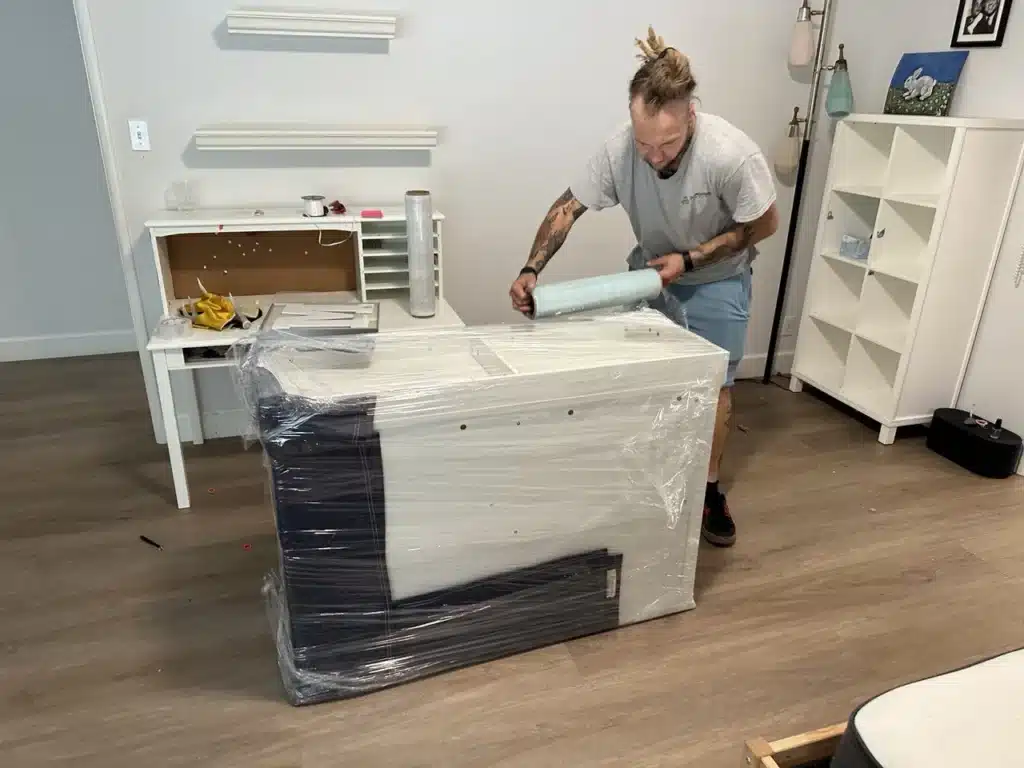
- Shrink wrap / stretch wrap (to hold blankets in place, keep doors/drawers closed, and add a protective outer layer)
- Packing tape (for securing protective layers and making temporary handles when needed)
- Moving blankets / furniture pads (main protection against scratches, dents, and cosmetic damage)
- Bubble wrap (for legs, edges, trim, and fragile details)
- Cardboard (excellent for glass protection, corner reinforcement, and creating buffer panels)
Moving Equipment To Reduce Effort and Injury Risk
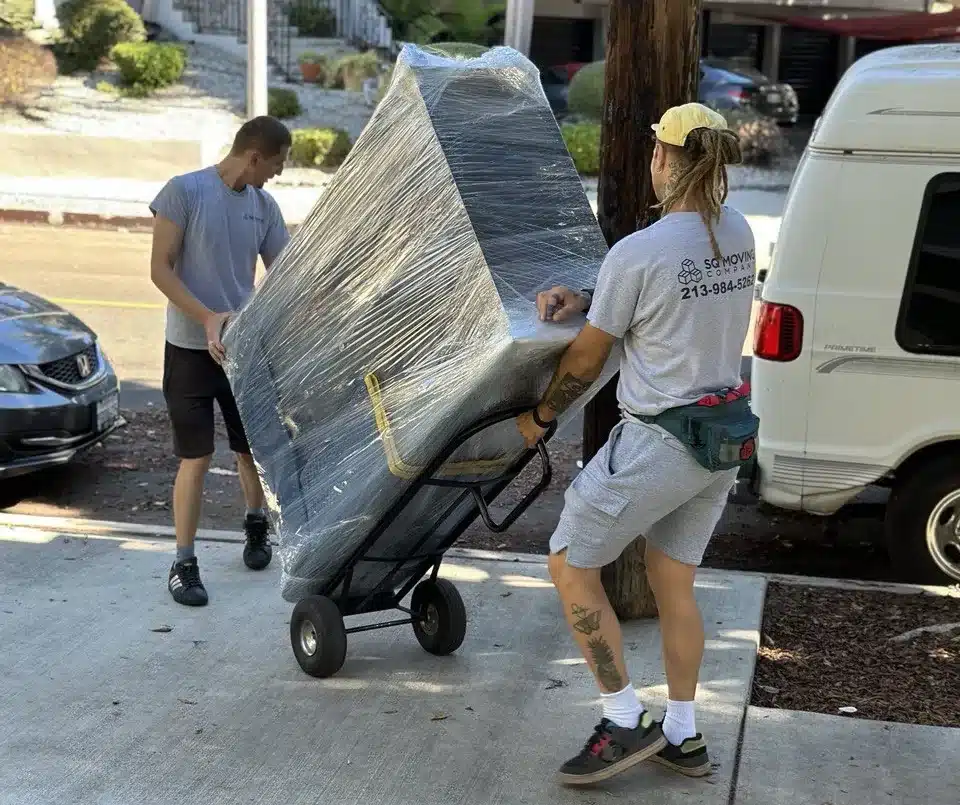
- Hand truck / dolly (best for stairs, curbs, and heavier pieces)
- Furniture dolly / four-wheeler (best for long hallways and flat surfaces)
- Shoulder straps / lifting straps (helpful in tight spaces when a dolly won’t fit)
Tools for Disassembly and Reassembly
- Allen wrenches (hex keys)
- Flathead + Phillips screwdrivers (or a drill with flat/Phillips bits)
- Socket wrench set
- Pliers
How to prepare furniture before you wrap and pack it
1) Empty everything
- heavier furniture = higher injury risk
- items inside can shift and crack, or damage the furniture from the inside
- you’ll likely need to tilt, flip, or angle pieces to get through doorways
2) Remove loose parts
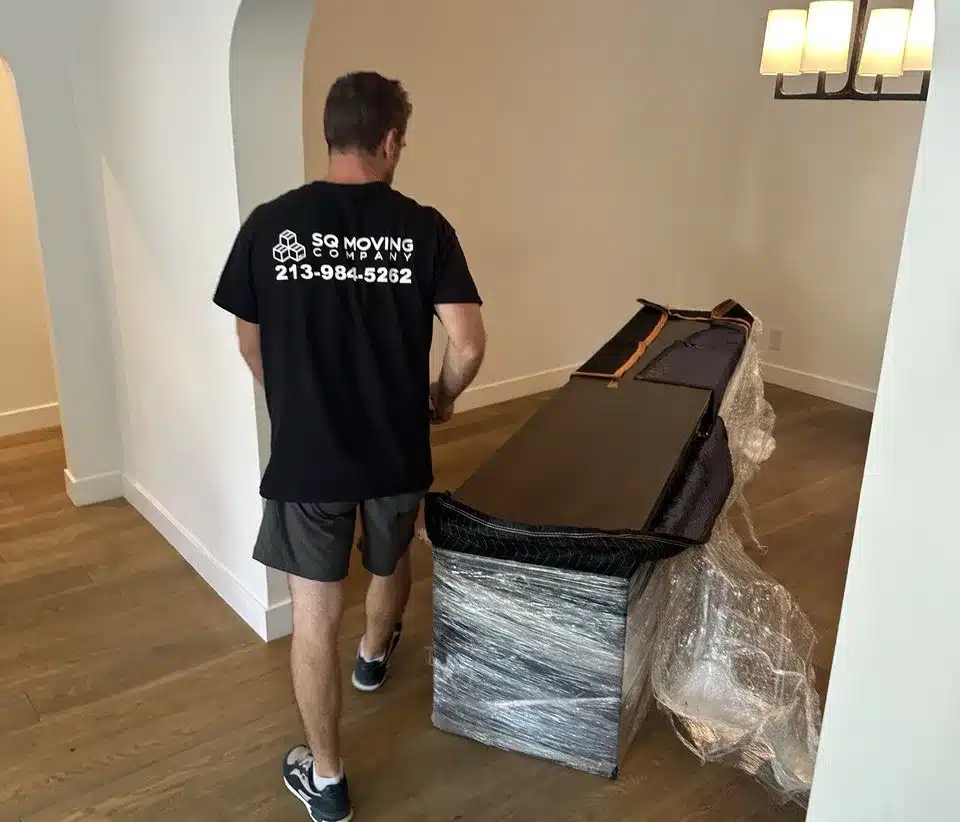
- TV stand shelves sitting on pins
- loose glass inserts
- removable drawers
- adjustable shelves
3) Clean and dust quickly
4) Take photos of electronics and cords
- take a quick photo of cable connections
- bundle cords together (use zip ties or tape)
- label cords if needed (HDMI, power, etc.)
How to pack and wrap common furniture for moving
A) Dressers, TV stands, nightstands, credenzas (boxy furniture)
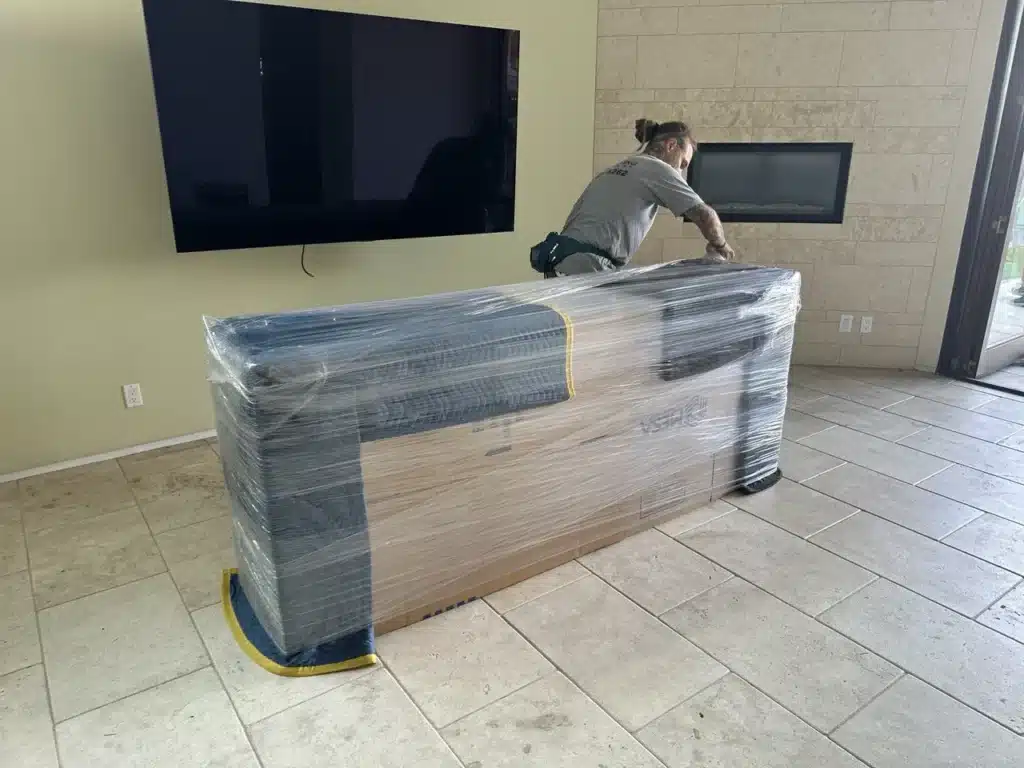
- Move the piece into the middle of the room so you have space around it.
- Don’t drag it or slide it (that’s how floors get scratched). Team-lift it with a partner.
- Cover the top, front, and sides with moving blankets. Focus on the visible surfaces to prevent cosmetic damage.
- Secure the blankets with shrink wrap:
- Start wrapping around the middle so the blankets don’t slip.
- Wrap upward to cover the top edge.
- Wrap downward to seal the lower edge and base.
- If you need to wrap the bottom area, tilt the piece slightly while your partner supports it—don’t rest the full weight on thin legs.
B) How to pack the couch or sofa for moving?
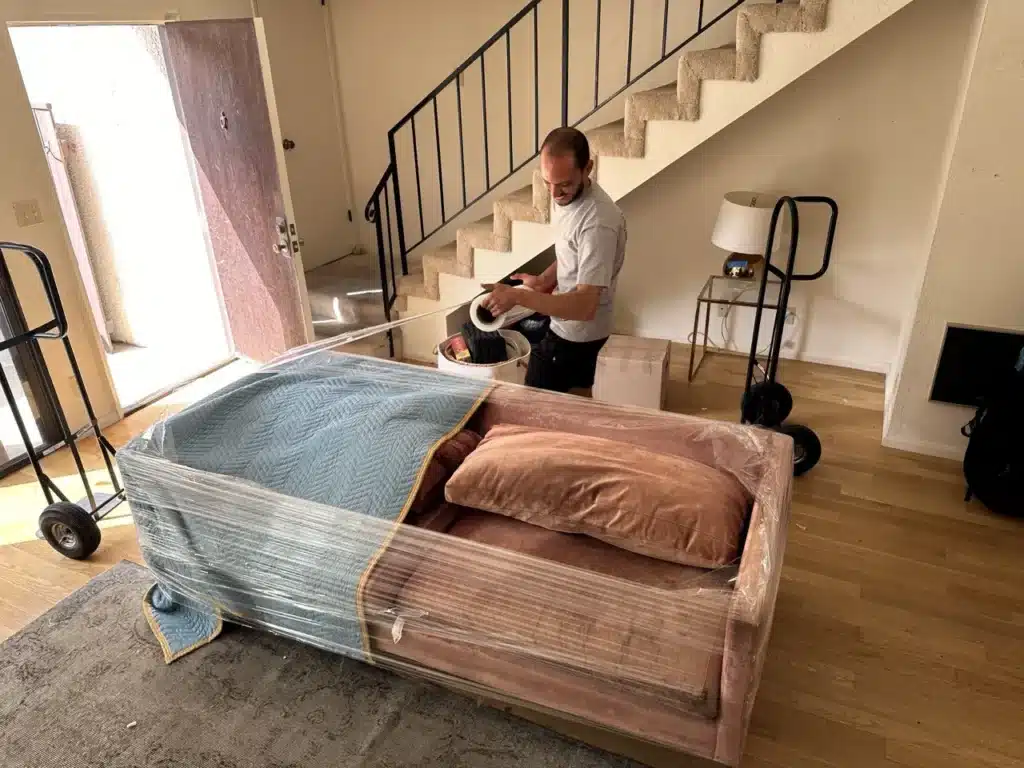
- Wrap the couch in a light layer of plastic first (especially for fabric).
- Cover it with moving blankets to protect from dents and scrapes.
- Wrap everything with plastic again to hold the blankets in place.
C) How to prepare a dining table for a move
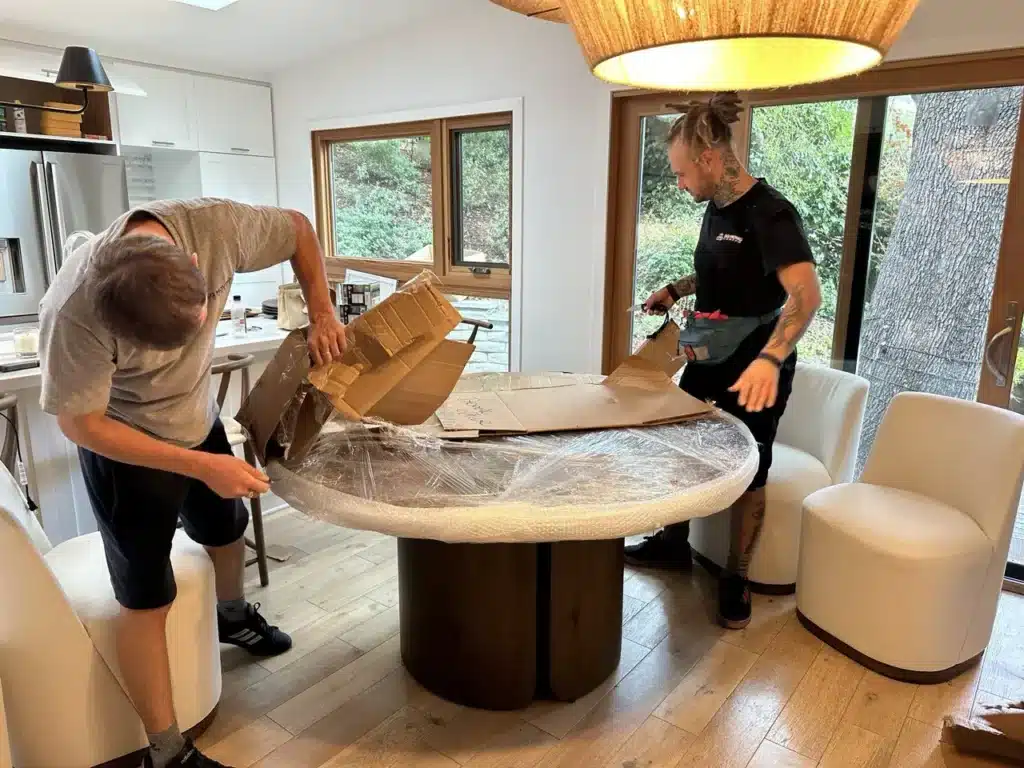
- Wrap the tabletop with blankets, then shrink wrap it tight
- Flip the table upside down (team lift)
- Remove legs using the right tool
- Bundle legs together and wrap them (blanket + shrink wrap)
D) Bed frame and mattress prep
Mattress
- Wrap in multiple layers of shrink wrap or use a mattress bag/case.
- If you only use shrink wrap, you can make temporary handles with heavy tape on corners (several layers).
Bed frame
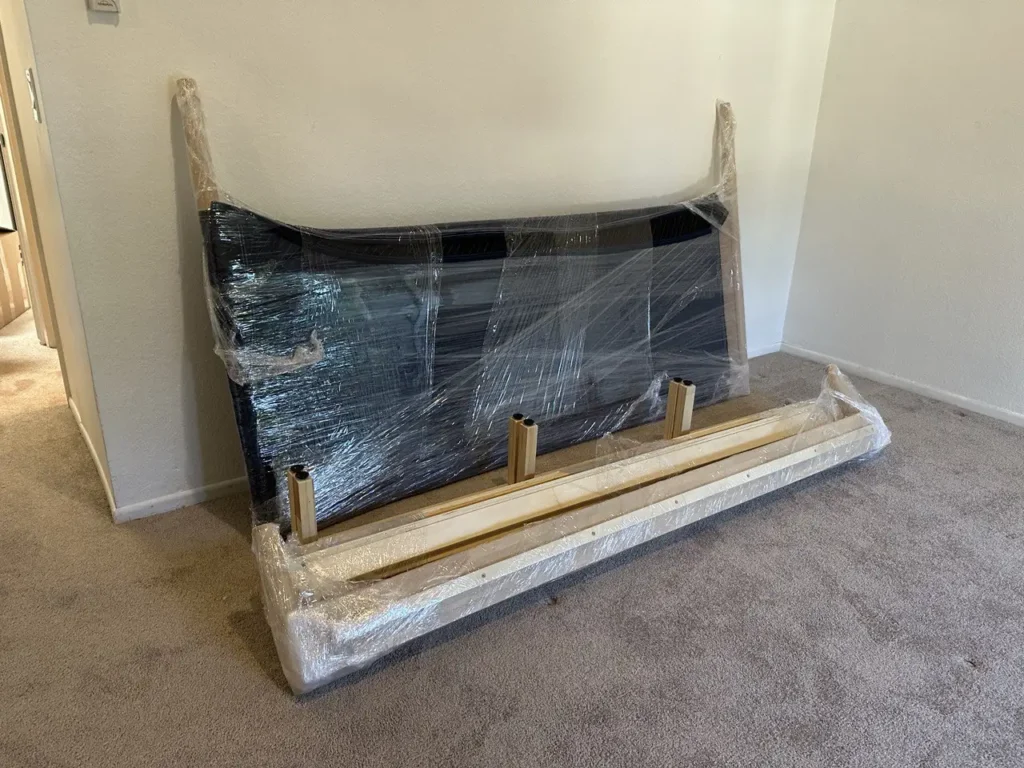
- Disassemble as needed.
- Wrap the headboard/footboard with blankets.
- Bundle side rails together and wrap them as one unit.
- Keep screws/bolts labeled and together.
E) Fragile furniture: glass, mirrors, marble, stone tops
- If removable: remove and pack separately
- If not removable: place cardboard over the glass, then blanket-wrap and shrink wrap
- Remove the slab if possible.
- Wrap with cardboard + moving blanket.
- Carry vertically (never flat).
- Don’t rush—stone can crack from stress and bending.
LA-specific moving logistics
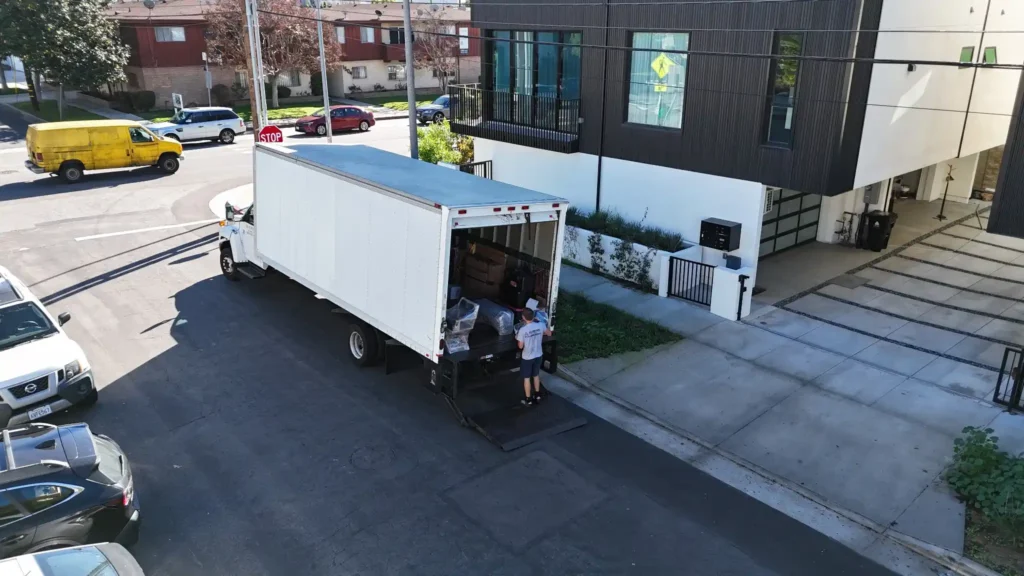
- Parking, loading and unloading: Plan where to park the truck before loading and unloading.
- Street sweeping and parking rules: Check posted signs so you don’t end up blocked, ticketed, or forced to move the truck mid-load.
- Apartments and high-rises: Many buildings require elevator reservations and specific move-in windows. If you’re hiring professional movers, some buildings may ask for insurance/COI—DIY moves usually won’t.
- Narrow hallways and staircases: Older LA buildings often have tight turns. Measure large pieces in advance so you don’t get stuck and have to disassemble last-minute.
How to use moving equipment
When to use a hand truck (dolly)
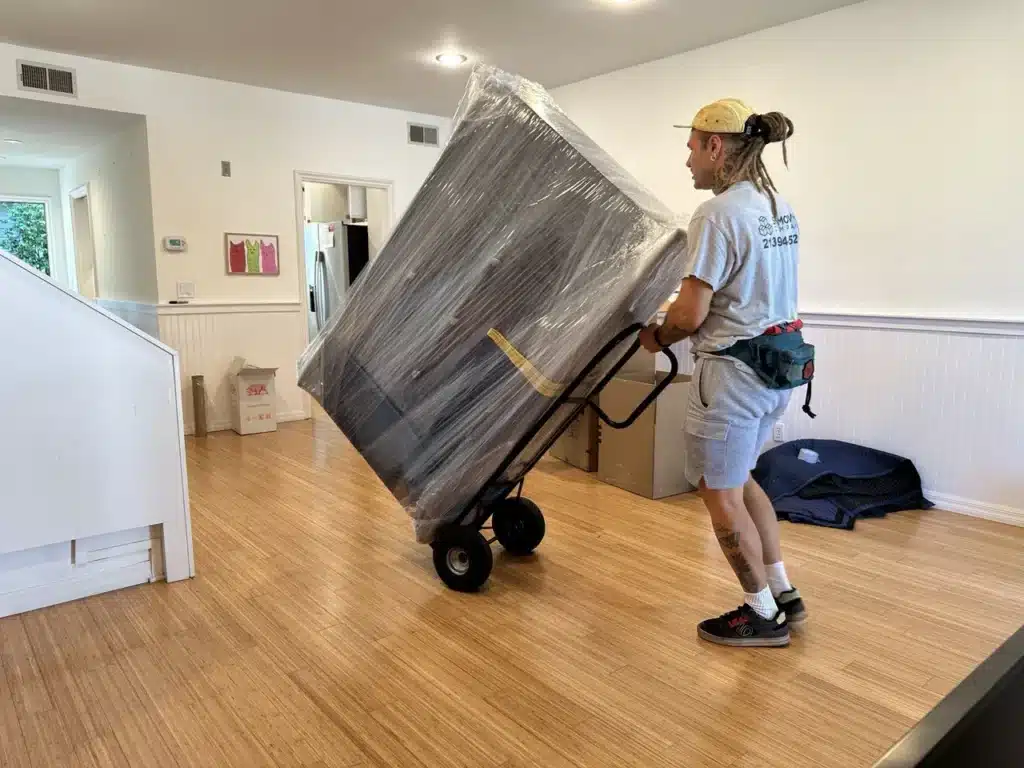
- stairs and steps
- curbs and uneven surfaces
- heavy, dense items (some dressers, safes, compact cabinets)
When to use a furniture dolly (four-wheeler)
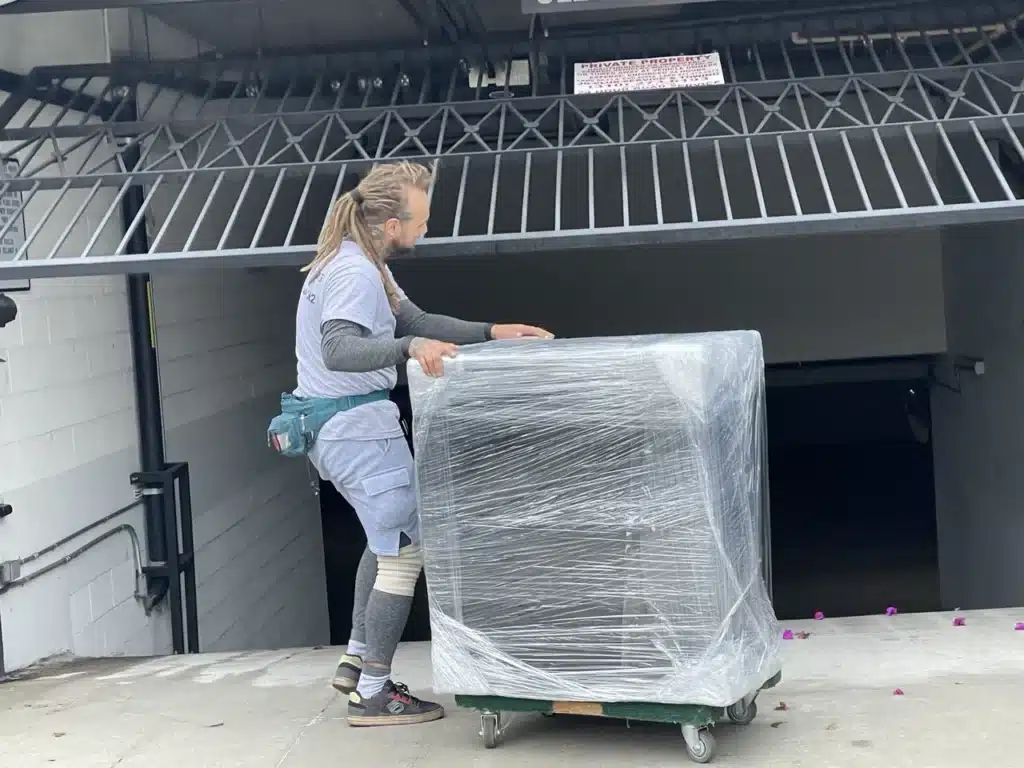
- long hallways
- smooth floors
- flat carries to/from the truck
- tilt gently
- slide the dolly under the center
- keep the weight balanced
- move slowly over thresholds
Shoulder straps
- tight corners
- narrow staircases
- places where a dolly can’t maneuver
Glass and stone
How to place furniture in the truck safely

- Load heavy furniture first, tight to the front wall of the truck
- Keep items snug so they can’t shift
- Put light items on top (soft bags, light boxes)
- Use ratchet straps / moving straps to secure rows
- Keep glass and stone vertical, protected with cardboard layers, strapped gently (don’t over-tighten)
How to unload furniture safely and avoid damage at the end
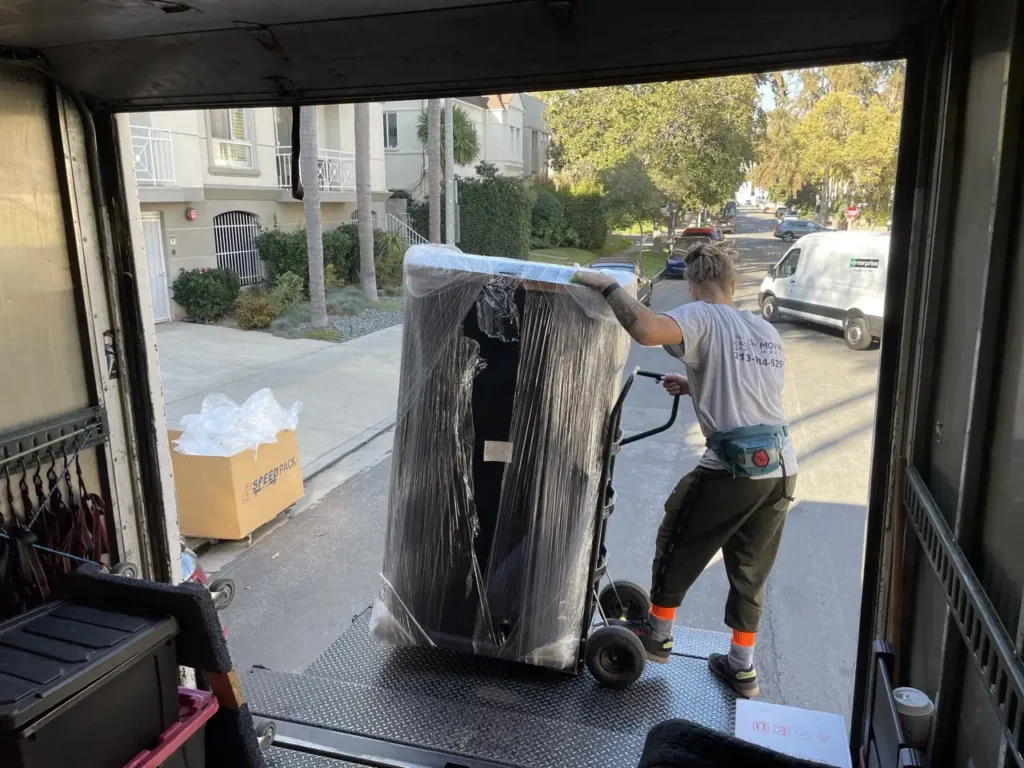
- Use the same equipment strategy as loading
- Stage items by room first
- Keep furniture wrapped until it’s placed
- Unwrap from the bottom first if you need to flip or assemble
- Flip pieces while wrapped to keep drawers/doors closed and protected
- Move carefully—don’t slide furniture across floors
Common mistakes that cause furniture damage and how to avoid them
1) Leaving drawers full
2) Wrapping fabric directly with dirty blankets
3) Shrink wrapping glossy finishes directly
4) Strapping glass too tight
5) Carrying marble flat
6) Tilting furniture onto thin legs
7) Sliding furniture across floors
8) Rushing at the end
Professional tips and “life hacks” for a smooth furniture move in LA
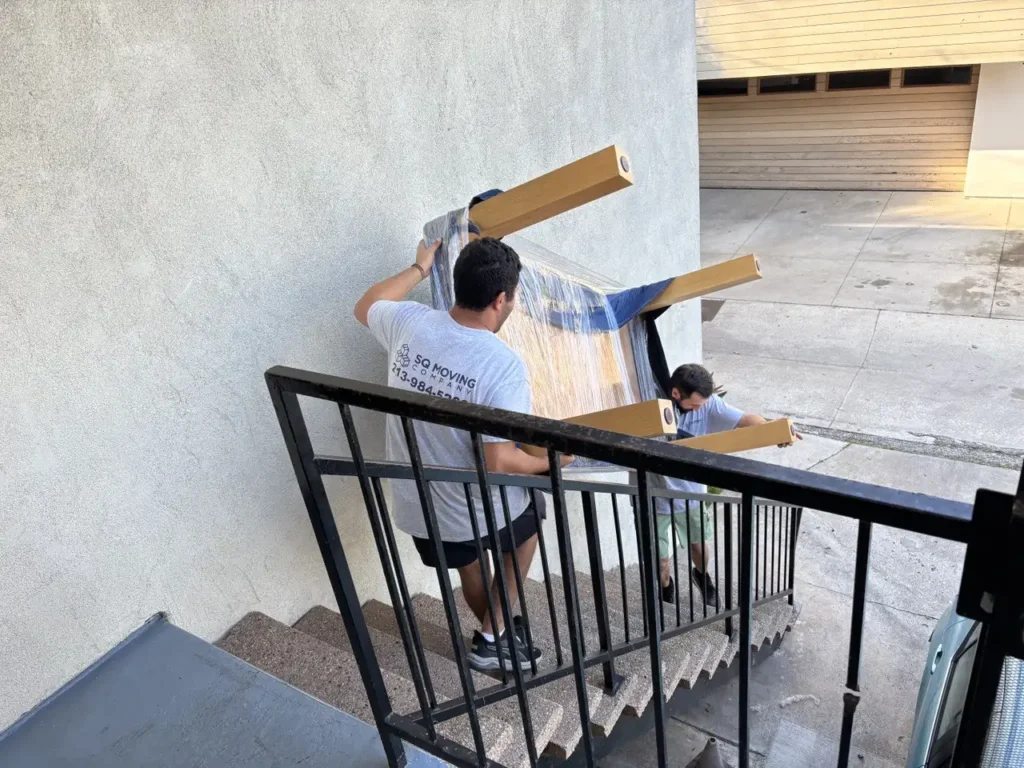
- Protect corners (they’re the most vulnerable). Add corner guards or build “corner pillows” with extra wrap layers.
- Use floor protection (runners, ram board, thick cardboard pathways), especially in apartments.
- Mark fragile spots: write “GLASS” on plastic where glass panels are.
- Wear heavy-duty gloves for grip and to prevent cuts.
- Always team lift heavy pieces. Keep your back straight and lift with your legs.
- If you’re renting, choose a truck with a ramp or liftgate when possible.
- Measure first: doorways, hallways, stair turns, elevator size. LA buildings can be tight.
- Plan parking/loading in advance (street sweeping days, loading zones, building rules, elevator reservations).
FAQ: How to Prepare Furniture for Moving in LA
Should I empty drawers and cabinets before moving furniture?
Yes. Empty drawers, cabinets, and shelves before you move. It makes furniture lighter, safer to carry, and less likely to tip, scrape walls, or break from the inside. Pack loose items separately in boxes or bags.
What’s the best way to wrap a dresser or TV stand for a local move?
Use moving blankets first to protect visible surfaces, then shrink wrap over the blankets to keep everything tight. Add extra padding on corners and edges. Avoid putting heavy pressure on thin legs—tilt with a partner instead of resting the full weight on the legs.
Should I remove couch legs before moving?
Usually, yes. Removing legs helps the couch fit through narrow doorways and tight hallways (common in LA apartments). It also prevents leg breakage during loading and reduces the chance you’ll get stuck mid-move and have to unpack and rewrap.
How do I protect glass doors, mirrors, and stone or marble tops?
If removable, take glass shelves/doors or stone tops out and pack separately. Add cardboard on both sides, then wrap with a moving blanket and secure with stretch wrap. Always carry glass and stone vertically—never flat—to reduce cracking risk.
How can I avoid problems with parking and loading in Los Angeles?
Plan your truck parking spot ahead of time and check street signs for restrictions and street sweeping. If you’re in an apartment, confirm elevator reservation rules and allowed move-in hours. Shorter walking distance = faster move and less risk of bumps and damage.
Conclusion
If you follow this guide, you can move your furniture with less stress, fewer surprises, and a much lower chance of damage. The goal isn’t “perfect packing”—it’s solid preparation, proper protection, and safe handling from start to finish.
If you’d rather skip the heavy lifting, SQ Moving Company is here to help. We provide professional furniture moving services, including careful wrapping, disassembly/reassembly, loading, and placement for local moves across Los Angeles and Orange County.